
Pico
The Raspberry Pi Pico is a low-cost, high-performance microcontroller board built around the RP2040 chip. RP2040 features a dual-core Arm Cortex-M0+ processor with 264kB internal RAM and support for up to 16MB of off-chip flash. A wide range of flexible I/O options includes I2C, SPI, and - uniquely - Programmable I/O (PIO). These support endless possible applications for this small and affordable package.
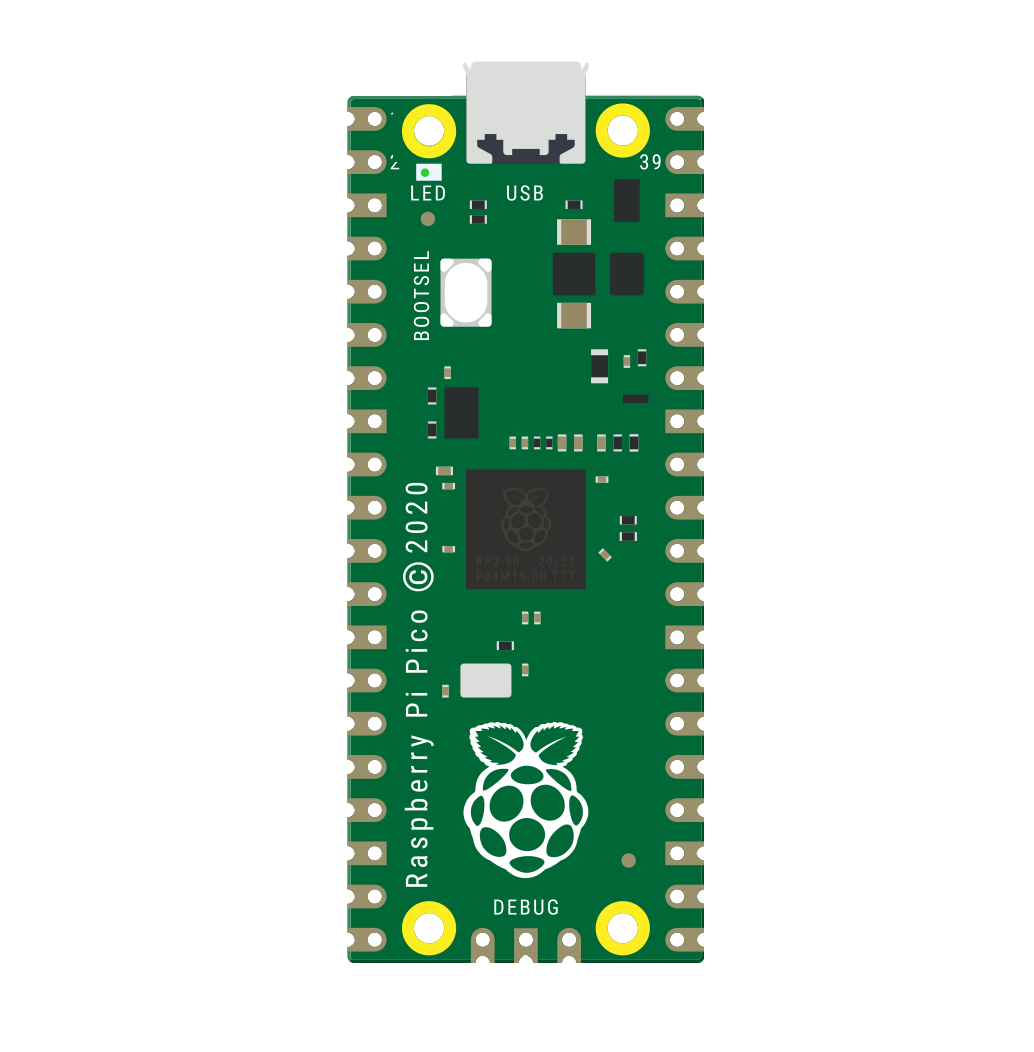
A Raspberry Pi Pico is programmed using MicroPython, C, or C++ and, unlike other Raspberry Pi devices, doesn’t run Linux or support removable storage. Instead, Raspberry Pi Pico is programmed by flashing binaries to the on-board flash memory.
There are two generations of the Raspberry Pi Pico series:
-
Raspberry Pi Pico (Pico 1)
-
Raspberry Pi Pico 2
Each generation is available in four variants, which differ based on:
Wireless connectivity. Variants that include the W suffix in the name include Wi-Fi and Bluetooth.
Presoldered headers. Variants are available either as castellated modules (for direct soldering) or with presoldered pin headers.
NOTE: This tutorial covers Pico 1
Key features
Raspberry Pi Pico and Pico H offer the following key features:
-
RP2040 microcontroller chip, including:
-
Dual-core M0+ processor.
-
Flexible clock running up to 133 MHz.
-
264 kB of SRAM.
-
USB 1.1 controller and PHY with device and host support.
-
Low-power sleep and dormant modes.
-
Accurate clock and timer.
-
Accelerated floating-point libraries.
-
Temperature sensor.
-
Eight Programmable I/O (PIO) state machines for custom peripheral support.
-
Flexible, user-programmable high-speed I/O.
-
Can emulate interfaces such as SD card and VGA.
-
-
-
Board features:
-
Drag-and-drop programming using mass storage over USB.
-
2 MB of on-board flash memory.
-
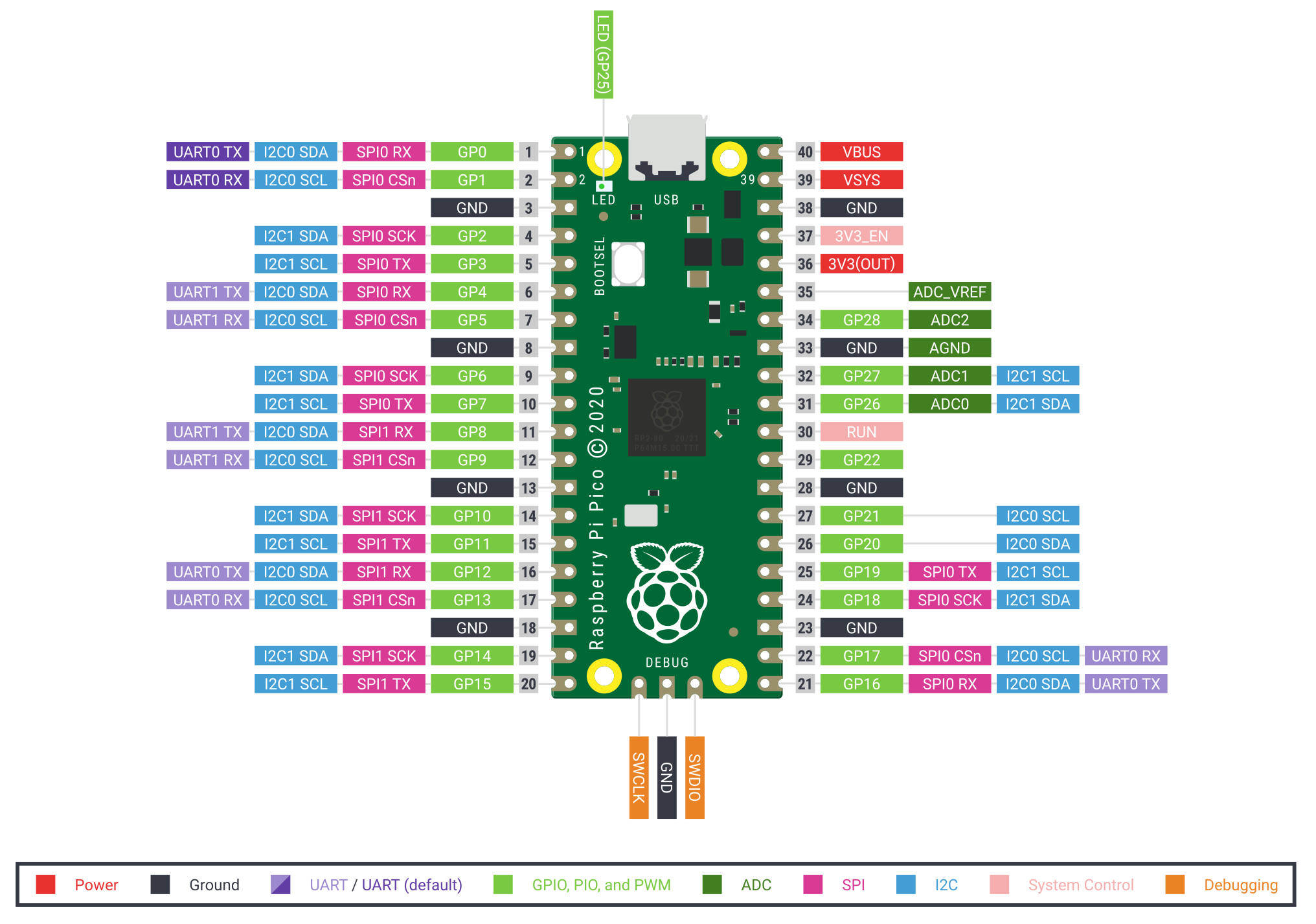
26 multi-function GPIO pins. For more information, see Non-wireless board layout.
-
Debug connector. For more information, see Debug connector (SWD).
-
-
Peripheral interfaces:
-
Two SPI
-
Two I2C
-
Two UART
-
Three 12-bit ADC
-
16 PWM channels
-
Pico pinout
Reference
- pico doc: official documentation
©2023-2024 rculock.com